Understand how poor circulation affects foot and leg wounds, which tests guide care, why timely vascular evaluation matters, and how to protect your feet.
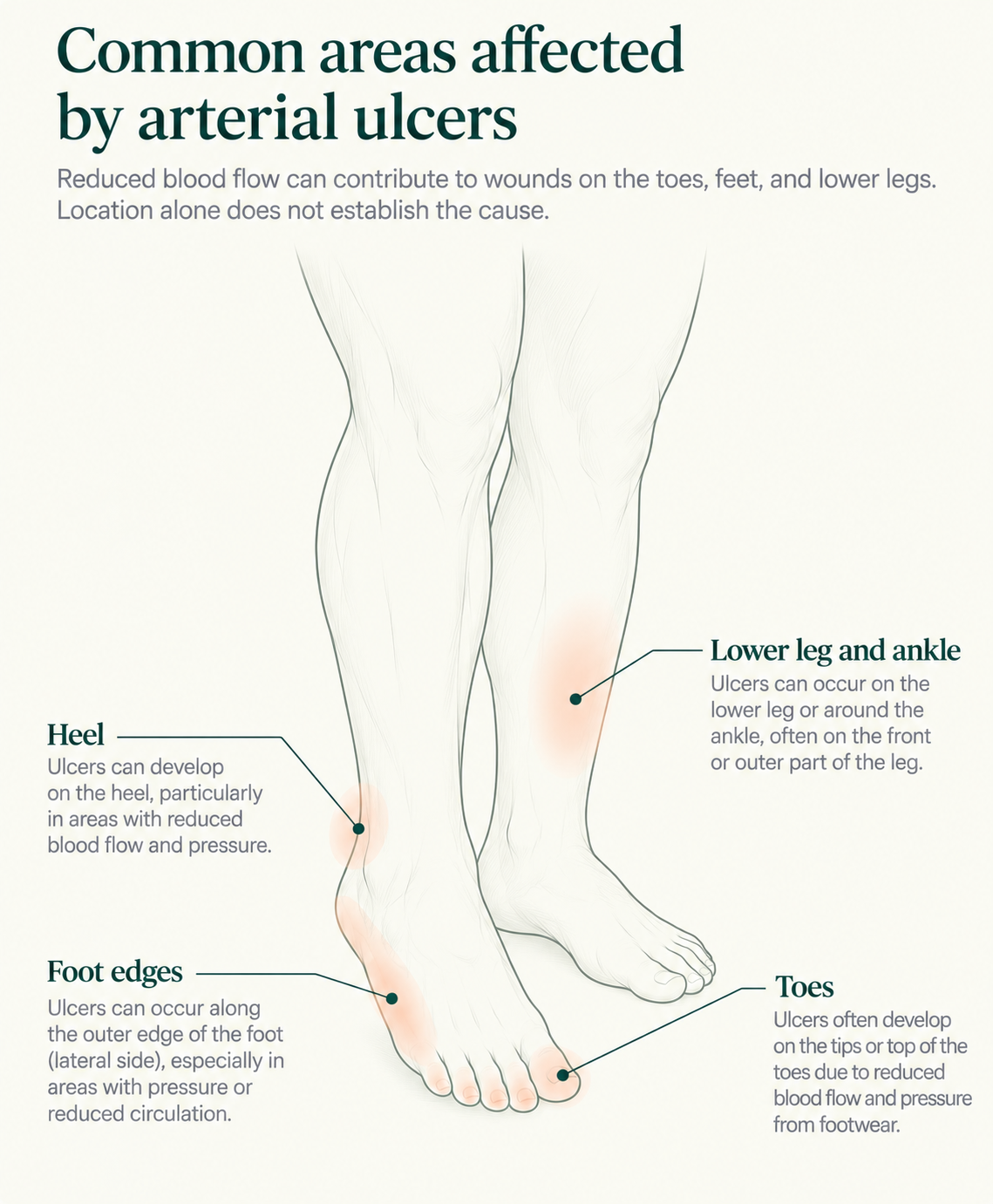
Arterial ulcers occur when reduced blood flow limits the oxygen and nutrients available to skin and tissue. They may affect the toes, feet, heels, or lower legs, and can be associated with peripheral artery disease.
Wounds may be painful or slow to heal. Coldness, color changes, and pain at rest can be warning signs, although symptoms vary. Wound location alone does not establish the diagnosis.
How circulation affects the skin
Peripheral artery disease can narrow arteries and reduce the blood reaching the toes, feet, or lower legs. Some patients experience discomfort with walking or pain while resting, while others—particularly those with neuropathy—may have little pain. A small wound can become serious when the surrounding tissue lacks sufficient blood flow.
Why healing may stall
Why Might an Arterial Ulcer Be Slow to Heal?
Healing can be difficult when blood flow is insufficient, even with careful dressings. Diabetes, smoking, and other cardiovascular risk factors may further increase the risk of poor healing.
A persistent foot or leg ulcer needs assessment of blood supply. Do not assume that every lower-leg wound should be treated as a venous ulcer.
Why dressings alone may not be enough
Wound dressings protect the area, but they cannot restore inadequate blood flow. Reduced perfusion can prevent tissue repair and increase the risk of infection or tissue loss. People with diabetes may also have stiffened arteries, which can make some circulation tests harder to interpret and require additional assessment.
A closer look at circulation
How Are Arterial Ulcers Evaluated?
Evaluation includes an examination of the wound and limb circulation, with tests such as an ankle-brachial index, toe pressures, or other perfusion studies when appropriate. Some patients require vascular imaging.
Your clinician may recommend urgent vascular consultation if there are signs of chronic limb-threatening ischemia, particularly with tissue loss or rest pain.
Understanding circulation tests
Circulation testing helps answer whether enough blood reaches the wound to support healing. A clinician may combine the examination with ankle pressures, toe pressures, or other studies, because no single test is appropriate in every situation. Persistent tissue loss or pain at rest may require prompt assessment for chronic limb-threatening ischemia.
Treatment guided by perfusion
How Are Arterial Ulcers Treated?
Treatment focuses on determining whether blood flow can be improved. Vascular specialists may consider revascularization, while the wound care plan addresses tissue protection, appropriate dressings, pressure reduction, and infection when present.
Compression is not a default treatment for an arterial ulcer. Debridement and other wound procedures must be selected with circulation and tissue condition in mind.
When restoring blood flow matters
If blood flow is severely limited, a vascular specialist may evaluate whether an artery-opening procedure or bypass could improve perfusion. The wound itself still needs protection and monitoring, but the timing of debridement and other interventions depends on tissue viability, infection, and the circulation findings. Treatment is individualized rather than based only on how the ulcer looks.
Everyday protection
What Can You Do at Home to Support Healing?
Protect the affected foot or leg, follow the prescribed dressing plan, and inspect for new wounds or color changes. Avoid friction, tight footwear, burns, and attempts to trim or remove damaged tissue yourself.
New wounds should not be managed by prolonged self-treatment when poor circulation is suspected. Keep pressure and accidental injury off the affected area, avoid extreme temperatures, and follow the established wound plan. Review medication and cardiovascular risk management with your medical team, as arterial disease affects more than the wound alone.
Know when to seek help
What Warning Signs Need Medical Attention?
Seek emergency evaluation for sudden severe limb pain, a newly cold or pale foot, abrupt numbness or weakness, or other signs of acute loss of circulation. These symptoms can threaten the limb.
Sudden loss of circulation is different from a slowly healing chronic ulcer and is a medical emergency. Blackening tissue, new wounds, or worsening pain at rest can also signal serious deterioration and need prompt clinical assessment. Do not delay urgent evaluation while waiting for a routine wound-care visit.
Long-term vascular health
How Can You Reduce the Risk of Future Arterial Ulcers?
Reducing future risk requires protecting the skin and addressing the underlying arterial disease. Properly fitting footwear, regular foot checks, prescribed medical therapy, and vascular follow-up can all play a role.
Any new wound, resting foot pain, or significant circulation-related symptom deserves timely medical evaluation.
Protecting the feet long term
Preventing new ulcers involves both daily foot protection and management of the underlying vascular disease. Regular inspection can detect damage before it becomes extensive, particularly when sensation is impaired. Ongoing vascular care, smoking cessation when relevant, and prescribed cardiovascular treatments may reduce future risk.
A dressing may protect the wound, but inadequate circulation must also be addressed.
Should I wear compression?
Do not begin compression for a suspected arterial ulcer without individualized circulation assessment and clinician guidance.
When is poor circulation an emergency?
Sudden severe pain, coldness, paleness, numbness, or weakness requires emergency medical assessment.
Protecting Circulation Is Central to Healing
Poor circulation can delay healing and may threaten the limb. Prompt wound evaluation and appropriate vascular care can help guide the safest next steps.
If you or someone you care for has a new or worsening foot or leg wound, timely clinical assessment can help establish a safe treatment plan.
References and Further Reading
For additional information, these independent resources may be helpful alongside your individualized care plan.
This guide is provided by The Wound Specialists for general patient education and informational purposes only. It is not a substitute for individualized medical evaluation, diagnosis, or treatment from a qualified healthcare professional.
Arterial circulation, wound care, footwear, offloading, and vascular treatment recommendations depend on the individual wound, blood flow, medical history, infection risk, and other clinical factors. Compression and wound procedures require appropriate clinical assessment.
Medical information and treatment recommendations may change over time, and this guide may not address every clinical circumstance. Although reasonable efforts are made to provide accurate and current information, completeness and accuracy cannot be guaranteed.
Consult your treating healthcare professional before changing your care plan. Do not delay seeking medical attention for new or worsening symptoms. Reading this guide does not establish a physician-patient relationship with The Wound Specialists.
Concerned about an arterial foot or leg ulcer?
Our Plantation clinic can help you arrange an evaluation and discuss an individualized care plan.