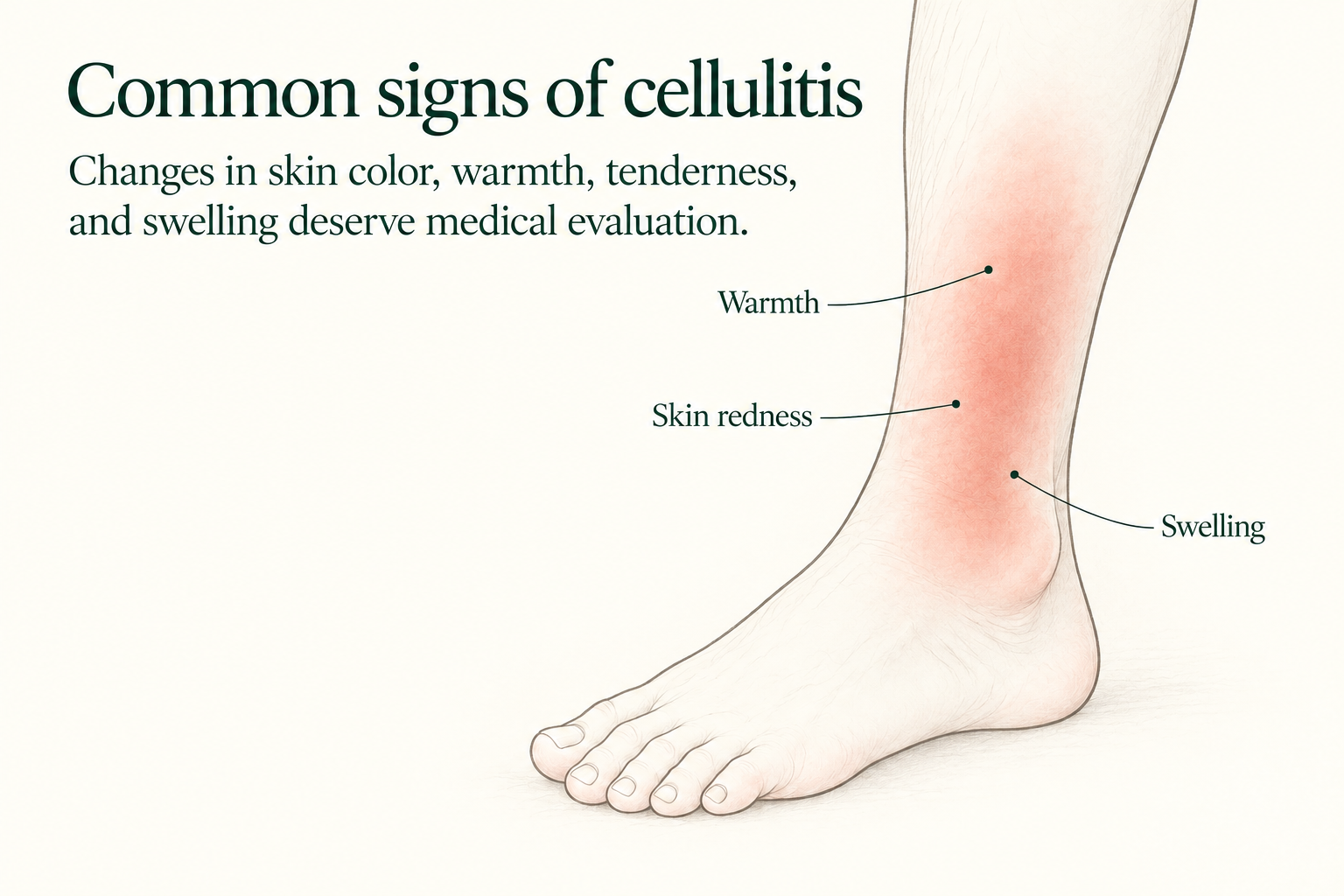
Cellulitis is a bacterial infection of the skin and the tissue beneath it. It often affects a leg or foot but can develop elsewhere. Bacteria may enter through a cut, skin crack, ulcer, or another break in the skin, although an opening is not always noticeable.
Because cellulitis can worsen or spread, suspected cellulitis deserves prompt medical evaluation. An examination helps determine whether the skin changes are caused by infection or another condition.
Recognizing a possible infection
What Are the Common Signs of Cellulitis?
Cellulitis may cause an area of skin to become warm, swollen, tender, or discolored. Redness is common on lighter skin, while changes may be less obvious or appear darker on other skin tones.
Symptoms can extend beyond the skin
Some people develop fever, chills, or a general feeling of illness. Spreading discoloration, increasing tenderness, or rapidly changing swelling should not be ignored.
Understanding risk
Why Does Cellulitis Develop?
Broken skin from wounds, scratches, or eczema can allow bacteria to enter. Swelling, lymphedema, venous disease, diabetes, and prior episodes of cellulitis may increase risk.
Not every red, swollen leg has cellulitis. Venous stasis dermatitis, contact irritation, and blood clots can have overlapping symptoms, and some may need different or urgent care.
Getting the diagnosis right
How Is Cellulitis Evaluated?
A clinician reviews how quickly symptoms developed, examines the affected skin, checks for a wound or possible entry point, and considers fever, medical history, circulation, and swelling.
Not every patient needs the same testing
Cellulitis is often diagnosed clinically. Blood tests, wound cultures, or imaging may be considered in selected situations, such as severe illness, unusual exposure, a draining wound, or concern for a deeper infection or another diagnosis.
Medical management
How Is Cellulitis Treated?
Antibiotics are the main treatment for bacterial cellulitis. A clinician chooses the type and route based on the infection’s severity, medical history, and other relevant factors. Some patients can be treated with oral medication, while severe infections may require hospital care and intravenous treatment.
If there is an associated wound, abscess, swelling, or another contributing problem, these may require separate assessment and treatment. Patients should not rely on dressings or over-the-counter creams to treat a suspected spreading infection.
Follow-up is part of treatment
Skin color and swelling may take longer to settle than the infection itself. However, symptoms should begin to improve with appropriate care. If they are worsening or have not begun improving within two to three days, the patient needs reassessment.
Supporting recovery
What Should You Do During Treatment?
Take medication exactly as prescribed and attend recommended follow-up visits. Protect any open area with the wound-care plan provided by your clinician, and discuss safe skin care and swelling management appropriate for your circulation and medical conditions.
Do not start leftover antibiotics, alter prescribed medications, or apply tight compression without medical guidance.
Recognize emergencies
When Should You Seek Urgent Medical Attention?
Seek prompt same-day medical assessment for new or worsening signs of cellulitis. Rapidly spreading discoloration, fever, or chills warrant immediate medical attention.
Seek emergency care now for severe or rapidly increasing pain, confusion, faintness, marked weakness, or signs of serious illness.
Also seek emergency care for rapidly progressing infection, black or purple skin changes, significant blistering, or suspected infection near the eye.
Contact the treating clinician promptly if redness, pain, or swelling worsens during treatment or is not starting to improve within 48–72 hours.
Answers to common questions
Frequently Asked Questions
Is every red, swollen leg cellulitis?
No. Venous inflammation, dermatitis, and other conditions can look similar. A clinical examination helps guide appropriate treatment.
Can cellulitis occur without an open wound?
Yes. Very small skin breaks may not be visible, and the entry point is not always identified.
Does cellulitis always require hospitalization?
No. Many cases can be treated outside the hospital, but severe illness or complications may require urgent hospital treatment.
Why does cellulitis sometimes return?
Persistent swelling, skin breakdown, and other underlying conditions can contribute. Addressing these factors may help reduce future episodes.
Early Evaluation Can Make a Difference
A new or changing area of skin infection deserves timely attention. The Wound Specialists can assess wound-related skin concerns and help determine when urgent or hospital-based care is needed.
References and Further Reading
These independent resources offer additional education alongside your individualized care plan.
This guide is provided by The Wound Specialists for general patient education and informational purposes only. It is not a substitute for individualized medical evaluation, diagnosis, or treatment from a qualified healthcare professional.
Antibiotic selection, wound care, swelling management, and follow-up recommendations depend on the severity of infection, circulation, medical history, and other clinical factors.
Medical information and treatment recommendations may change over time, and this guide may not address every clinical circumstance. Although reasonable efforts are made to provide accurate and current information, completeness and accuracy cannot be guaranteed.
Consult your treating healthcare professional before making changes to your wound care or treatment plan. Seek qualified medical care for new or worsening symptoms, and do not delay seeking medical attention because of information in this guide.
Reading this guide does not establish a physician-patient relationship with The Wound Specialists.
Concerned about cellulitis?
Our Plantation clinic can help you arrange an evaluation and discuss an individualized care plan.