Diabetic foot wounds may begin with a blister, cut, or rubbing from footwear. They can become serious even when the injury looks small or causes little pain.
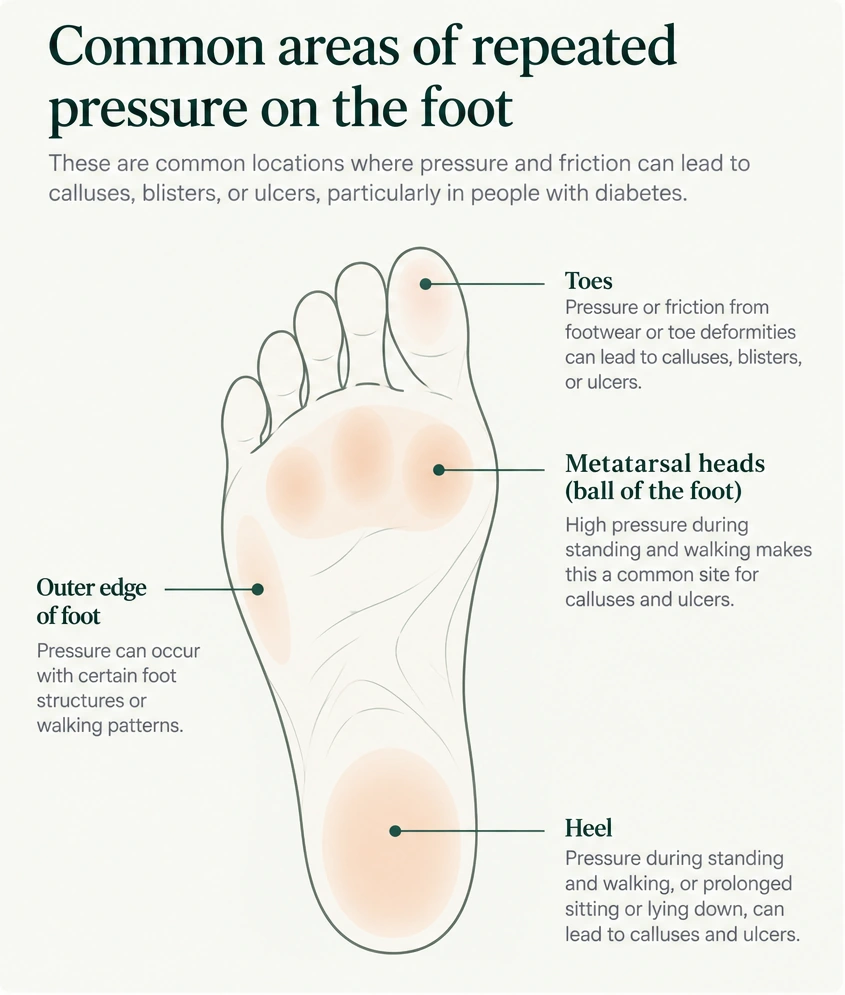
Common areas exposed to repeated pressure. Wounds can occur elsewhere, and pressure patterns differ from person to person.
Why they develop
Reduced sensation may make it difficult to notice injury. Repeated pressure or friction can damage the skin, especially beneath a callus. Poor circulation and elevated blood sugar can make healing more difficult.
Understanding delayed healing
Why Isn’t My Diabetic Foot Wound Healing?
If a wound is not improving, the problem may extend beyond the dressing itself. Repeated pressure, reduced blood flow, infection, and medical conditions can all interfere with healing.
Pressure and circulation matter
Walking on a wound can repeatedly injure fragile tissue, even without pain. Reducing pressure is called offloading. A clinician can recommend an appropriate way to protect the affected area, which may involve specialized footwear or another offloading device. Poor circulation may also limit healing and sometimes requires vascular evaluation.
Infection and other barriers
Infection can involve the skin or deeper structures. Not every open wound is infected, and antibiotics are not routinely needed without clinical infection. Blood sugar, swelling, nutrition, and other factors may also contribute.
Understanding your care plan
How Are Diabetic Foot Wounds Evaluated and Treated?
Two diabetic foot wounds can look alike yet need very different care. A wound specialist evaluates the wound and its underlying causes before recommending treatment.
What an evaluation may involve
The assessment may include wound depth, circulation, sensation, infection risk, foot structure, and pressure from walking or footwear. Vascular studies or imaging may be appropriate for some patients.
Treatment is individualized
Depending on the findings, care may include selected debridement, pressure relief, appropriate dressings, treatment of infection when present, and coordination with vascular or other specialists. Not every treatment is suitable for every wound, particularly when circulation is severely impaired.
Between appointments
Caring for Your Diabetic Foot Wound at Home
What you do between appointments matters. Follow the wound care and activity instructions given by your treating clinician rather than choosing treatments on your own.
Protect and monitor your feet
Use prescribed pressure-relieving devices and follow walking or activity restrictions.
Keep dressings in place as directed. Contact your clinician if a dressing becomes wet, saturated, or difficult to maintain.
Check both feet daily for new wounds, blisters, redness, swelling, drainage, or discoloration.
Wear protective footwear and avoid walking barefoot.
Do not cut calluses, open blisters, or apply harsh antiseptics or other wound products without guidance.
Blood sugar management, nutrition, and avoiding tobacco can also support healing. Tell your clinician if you are unable to follow the care plan consistently.
Recognize changes early
When Should You Seek Medical Attention?
Do not wait for pain before seeking care. Reduced sensation may mask significant injury or infection.
Contact your clinician promptly
New or worsening redness, warmth, swelling, drainage, or odor
A wound that enlarges, deepens, changes color, or develops new breakdown
A newly red, warm, or swollen foot, even without an obvious wound
New blisters, darkened skin, or difficulty keeping the prescribed dressing in place
Some changes require same-day assessment. A newly swollen, warm foot can also reflect a serious bone-and-joint condition, not just infection.
Seek emergency care immediately
Rapidly spreading redness or swelling with fever, chills, or feeling very unwell
Confusion, fainting, or severe weakness
A suddenly cold, pale, or blue foot, especially with new numbness, weakness, or pain
Rapidly developing black tissue or extensive discoloration
Do not wait for a routine appointment or callback if these symptoms occur.
Protecting your feet long term
How Can You Prevent Future Diabetic Foot Wounds?
Even after a wound heals, neuropathy, abnormal pressure, and circulation problems may remain. Preventing another wound requires ongoing attention.
Everyday prevention
Inspect your feet daily and report new skin changes early.
Wear well-fitting, protective shoes; use specialized footwear if recommended.
Have calluses and pressure areas assessed rather than treating them yourself.
Keep regular foot examinations and work with your healthcare team on diabetes and vascular health.
Answers to common questions
Frequently Asked Questions
Can a diabetic foot wound be serious even if it doesn’t hurt?
Yes. Neuropathy can reduce pain sensation. A wound may be serious even when it does not hurt, so new openings or changes need prompt assessment.
How long does a diabetic foot wound take to heal?
Healing varies with wound depth, circulation, pressure, infection, and other factors. An evaluation helps identify what may be delaying progress.
Can I walk on my foot if I have a diabetic foot ulcer?
Sometimes walking can worsen the wound, especially on the bottom of the foot. Follow the individualized activity and offloading instructions from your clinician.
Does every diabetic foot wound need antibiotics?
No. Antibiotics are used for clinical infection, not simply because a wound is open. A clinician should assess concerning changes.
Understanding Your Wound Is Part of Protecting Your Health
Diabetic foot wounds require more than a dressing. Recognizing changes early and addressing the cause can protect your health and improve the chance of healing.
If you have an open wound or a foot that is not improving, schedule an individualized wound evaluation rather than waiting for it to heal on its own.
References and Further Reading
For additional information, these independent resources may be helpful alongside your individualized care plan.
This guide is provided by The Wound Specialists for general patient education and informational purposes only. It is not a substitute for individualized medical evaluation, diagnosis, or treatment from a qualified healthcare professional.
Wound care, offloading, footwear, and other recommendations depend on the wound, circulation, sensation, infection risk, medical history, and other clinical factors.
Medical information and treatment recommendations may change over time, and this guide may not address every clinical circumstance. Although reasonable efforts are made to provide accurate and current information, completeness and accuracy cannot be guaranteed.
Consult your treating healthcare professional before making changes to your wound care or treatment plan. Seek qualified medical care for new or worsening symptoms, and do not delay seeking medical attention because of information in this guide.
Reading this guide does not establish a physician-patient relationship with The Wound Specialists.
Concerned about a foot wound?
Our Plantation clinic can help you arrange an evaluation and discuss the next appropriate step.