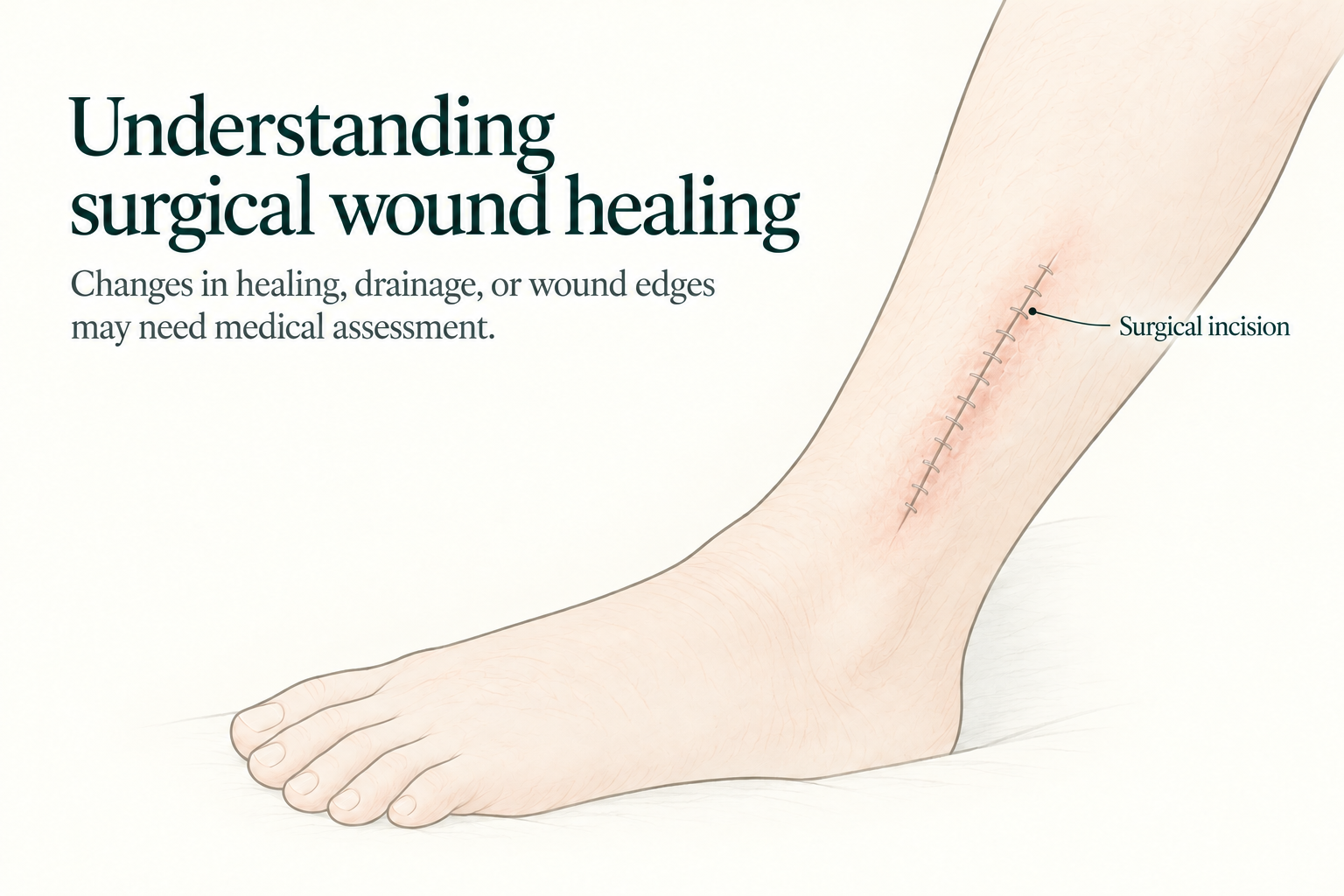
A surgical wound is an incision or tissue opening created during an operation. Some heal with their edges closed by sutures, staples, or adhesive, while others are intentionally left open or may reopen during recovery.
A skin graft transfers skin to help cover an area of tissue loss. Graft sites and the places where the skin was taken both need careful follow-up. A change in healing does not always mean infection, but it deserves assessment.
Recognizing changes
When Does a Surgical Wound Need More Attention?
Illustration only. Surgical wounds can look different depending on the operation, location, and stage of healing.
Some tenderness, swelling, or drainage may occur after surgery, depending on the procedure and recovery stage. New separation of wound edges, increasing drainage, worsening redness, or a change in tissue color should be discussed with the surgical team.
Incision separation and graft concerns
Part or all of an incision may pull apart, a complication called dehiscence. A graft or flap may also lift, change appearance, or fail to heal as expected. These findings call for individualized evaluation rather than self-treatment.
Barriers to healing
Why Might a Surgical Wound Heal Slowly?
Healing depends on the procedure, depth of the wound, blood flow, pressure or movement across the area, and a patient's overall health. Diabetes, swelling, infection, poor nutrition, smoking, and certain medications may affect recovery.
More than a dressing issue
If a wound has stalled, a clinician may need to investigate its underlying causes. Repeated dressing changes alone may not correct poor circulation, mechanical tension, or deeper tissue complications.
An individualized review
How Is a Slow-Healing Surgical Wound Evaluated?
A wound clinician reviews the operation, time since surgery, wound appearance, drainage, and current treatment instructions. Assessment may include wound depth, tissue condition, circulation, signs of infection, and how nearby movement or pressure affects healing.
Where indicated, the treating team may arrange additional testing or coordinate directly with the surgeon. New wound problems should be reported to the operating surgeon, especially when implants, deeper structures, grafts, or flaps may be involved.
Protecting the wound
What Treatment May Be Needed?
The plan depends on whether the wound is closed or open, its depth, and the reason healing has slowed. Care may include gentle cleansing, an appropriate protective dressing, management of drainage, and attention to circulation or pressure. Selected wounds may need additional procedures or surgical reassessment.
For a skin graft, maintaining the prescribed dressing and protecting the graft from friction or movement can be particularly important. Do not lift a graft dressing, remove sutures, or change the surgeon's instructions without guidance.
During recovery
How Can You Support Healing?
Follow the surgical team's instructions for dressing care, bathing, activity restrictions, and follow-up. Clean your hands before handling dressings and avoid pulling at closures or disturbing a graft. Ask before applying any products to the incision.
If dressings loosen, become saturated, or cause new discomfort, contact your treating team. Let them know promptly about new drainage, increased pain, or wound-edge changes.
When to act
When Should You Seek Medical Attention?
Contact your surgeon or treating healthcare professional promptly if the incision begins to open, drainage increases or becomes cloudy or foul smelling, redness spreads, pain worsens, or a graft changes color or begins lifting.
Seek urgent evaluation for fever or chills with a worsening wound, rapidly spreading skin changes, or significant bleeding.
Seek emergency care for an incision that opens deeply with visible internal tissue or organs, severe uncontrolled bleeding, or symptoms of severe illness such as confusion or faintness.
If healing has stalled without an emergency, arrange an examination rather than relying only on repeated dressing changes.
Answers to common questions
Frequently Asked Questions
Is it normal for a surgical incision to drain?
Some drainage may be expected after certain operations. A new increase, cloudy or foul-smelling fluid, or a change from your surgeon's expected recovery pattern warrants contact with the treating team.
What if my incision starts to separate?
Contact your surgeon promptly. Deep or extensive separation, particularly with exposed internal tissue, requires emergency evaluation.
Can a wound specialist help if my surgery was performed elsewhere?
Yes. A wound specialist can assess barriers to healing and support wound management, ideally while coordinating with your operating surgeon.
Should I remove a skin graft dressing to check underneath?
No, not unless directed by your surgical team. Grafts may require protection from movement and dressing disturbance during healing.
Specialized Assessment for Slow-Healing Surgical Wounds
The Wound Specialists evaluates surgical and graft-site wounds that are not progressing as expected and provides individualized care in coordination with the surgical team.
References and Further Reading
Additional information about surgical wounds, infection warning signs, and graft-site care from established clinical organizations.
This guide is provided by The Wound Specialists for general patient education and informational purposes only. It is not a substitute for individualized medical evaluation, diagnosis, or treatment from a qualified healthcare professional.
Surgical wound care, activity, dressing changes, graft protection, and treatment decisions depend on the procedure, your surgeon’s instructions, circulation, medical history, and other clinical factors.
Medical information and treatment recommendations may change over time, and this guide may not address every clinical circumstance. Although reasonable efforts are made to provide accurate and current information, completeness and accuracy cannot be guaranteed.
Consult your treating healthcare professional before making changes to your wound care or treatment plan. Seek qualified medical care for new or worsening symptoms, and do not delay seeking medical attention because of information in this guide.
Reading this guide does not establish a physician-patient relationship with The Wound Specialists.
Concerned about a wound after surgery?
Our Plantation clinic can evaluate surgical and graft-site wounds that are slow to heal or have developed new problems.