What Are Pressure Injuries and Why Do They Develop?
Pressure injuries develop when prolonged pressure, sometimes combined with shear, damages skin and deeper tissue. People who have difficulty moving, reduced sensation, or prolonged bed or chair time are especially vulnerable. Injuries may begin as persistent discoloration or tenderness before skin opens.
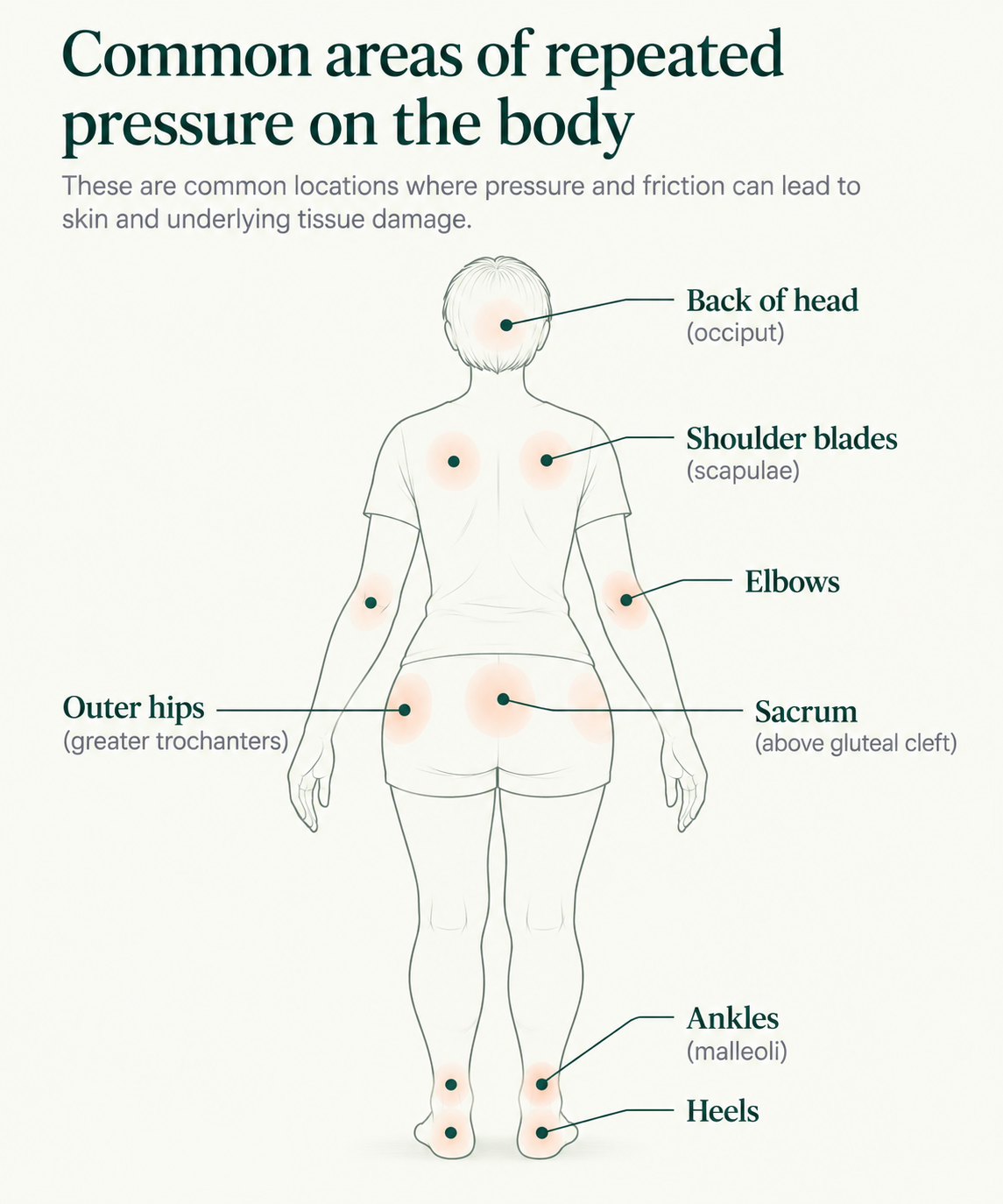
Common risk areas include the back of the head, shoulder blades, elbows, sacrum, outer hips, ankles, and heels. Risk varies with positioning and support surfaces. A new area of discoloration, warmth, firmness, or breakdown should be evaluated early.
Where pressure injuries occur
Pressure injuries can develop during prolonged sitting or bed rest, sometimes even when a person is using a mattress or cushion designed to reduce pressure. Risk increases when movement is limited, sensation is reduced, or a person cannot change position without help. Early changes should not be dismissed just because the skin remains intact.
Understanding delayed healing
Why Isn’t My Pressure Injury Healing?
A pressure injury may stall if weight continues to rest on the damaged area, if sliding or friction repeatedly disrupts tissue, or if moisture affects the surrounding skin. Nutrition, circulation, infection, and other medical conditions can also influence recovery.
Some damage extends deeper than it appears on the surface. If an injury is not improving, the care plan and pressure-relief strategy need reassessment rather than simply changing dressings.
Why stalled wounds need reassessment
Persistent pressure can undo progress between dressing changes. Excess moisture may weaken the skin around the wound, while shear from sliding in bed or a chair can injure deeper tissue. When healing stalls, the clinician may need to reassess positioning, equipment, nutrition, and other contributors rather than focusing only on the wound surface.
Understanding your care plan
How Are Pressure Injuries Evaluated and Treated?
Your clinician evaluates the wound depth, tissue condition, drainage, surrounding skin, and factors contributing to pressure. The examination helps determine appropriate treatment and whether additional testing or specialty care is needed.
Care may include individualized offloading, skin protection, appropriate dressings, treatment of infection when present, and removal of nonviable tissue when indicated. Not every pressure injury requires the same intervention.
An individualized treatment plan
Pressure injuries vary in severity, from intact skin with deeper injury to open wounds involving deeper structures. Accurate assessment helps identify the extent of damage and whether infection or other complications need attention. The wound plan may change as the tissue responds, and some patients benefit from coordinated care involving caregivers or other specialists.
Making pressure relief practical
How Can You Relieve Pressure in Bed or a Wheelchair?
Pressure relief is essential. A clinician may recommend a personalized turning or repositioning plan, a pressure-redistributing mattress or cushion, and adjustments to seating or positioning. The schedule and equipment depend on mobility, skin condition, and overall health.
Heels and other bony areas may need dedicated offloading. Pillows and devices should be positioned so that pressure is genuinely reduced, without creating new pressure points. Ask your care team to review your setup if you are uncertain.
Pressure relief must fit daily routines
An effective plan must work in the patient’s real daily routine, including sleep, transfers, wheelchair use, and time spent sitting. A support surface can help redistribute pressure but cannot reliably eliminate the need to change position. The care team can demonstrate safer positioning and check whether a device is creating pressure elsewhere.
Daily care and caregiver guidance
Caring for a Pressure Injury at Home
Follow the prescribed cleansing, dressing, and pressure-relief instructions. Keep the wound protected and avoid prolonged pressure or dragging across the injured area. Caregivers should check the surrounding skin regularly and report new breakdown.
An apparently small opening can hide more extensive tissue damage, so home observations should include the wound edges and nearby skin, not only the center. If a dressing repeatedly becomes wet, dislodged, or contaminated, let the treating team know. A caregiver’s observations between visits may help identify changes early.
Recognizing important changes
When Should You Seek Medical Attention?
Contact your wound care clinician promptly for an enlarging wound, new skin breakdown, worsening redness, warmth, swelling, odor, drainage, discoloration, or increasing pain. Even without pain, a new dark or purple area may indicate deeper damage.
People with reduced sensation may not feel pain even when tissue damage is progressing. A new purple or maroon area, rapidly increasing size, or loss of previously healthy skin is a reason to seek earlier reassessment. Do not wait for the next routine appointment when a wound changes significantly.
Protecting vulnerable skin
How Can You Prevent Future Pressure Injuries?
Preventing recurrence depends on consistent skin checks and reducing pressure at vulnerable areas. Appropriate positioning, support surfaces, mobility assistance, and moisture protection should be tailored to the person and their care environment.
Continue monitoring healed areas, as the skin can remain fragile. Ask your care team to reassess equipment and offloading if your activity level or mobility changes.
Protecting healed skin
Even after a pressure injury closes, the original site may be vulnerable to another injury. Prevention plans should be revisited after changes in mobility, illness, equipment, or caregiving support. Regular skin checks and realistic pressure-relief routines are especially important for people who cannot reposition independently.
Answers to common questions
Frequently Asked Questions
Can a pressure injury happen without an open wound?
Yes. Persistent discoloration or deep tissue changes may occur before the skin breaks. Seek evaluation rather than waiting for an open sore.
Does a special cushion replace repositioning?
No. Support surfaces help redistribute pressure but do not replace an individualized pressure-relief plan.
Why is my wound not healing?
Ongoing pressure, tissue damage, or other health factors may be interfering. A wound specialist can reassess the cause and care plan.
When should I call the clinic?
Contact us for new breakdown, enlargement, increased drainage, odor, discoloration, or other deterioration.
Protecting Skin Is Part of Supporting Healing
Pressure injuries require a plan that addresses pressure, skin protection, and overall health. Our clinic can evaluate new or stalled wounds and help guide individualized care.
If you or someone you care for has a pressure injury, timely evaluation can help determine the most appropriate next step.
References and Further Reading
For additional information, these independent resources may be helpful alongside your individualized care plan.
This guide is provided by The Wound Specialists for general patient education and informational purposes only. It is not a substitute for individualized medical evaluation, diagnosis, or treatment from a qualified healthcare professional.
Pressure relief, wound care, and equipment recommendations depend on the wound, mobility, circulation, medical history, and other clinical factors.
Medical information and treatment recommendations may change over time, and this guide may not address every clinical circumstance. Although reasonable efforts are made to provide accurate and current information, completeness and accuracy cannot be guaranteed.
Consult your treating healthcare professional before making changes to your wound care or treatment plan. Seek qualified medical care for new or worsening symptoms, and do not delay seeking medical attention because of information in this guide.
Reading this guide does not establish a physician-patient relationship with The Wound Specialists.
Concerned about a pressure injury?
Our Plantation clinic can help you arrange an evaluation and discuss an individualized care plan.