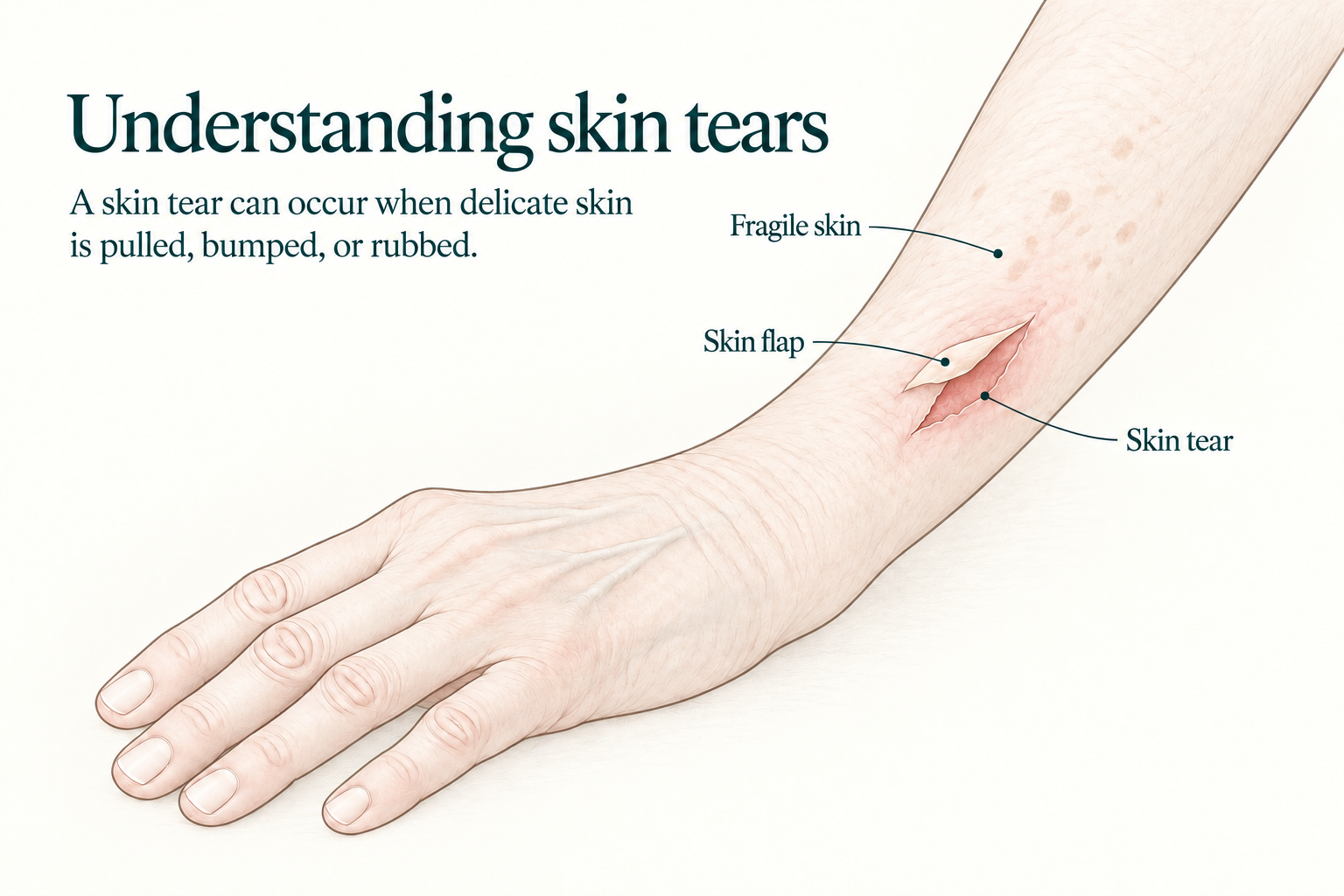
Learn why skin tears and traumatic wounds may need specialized evaluation, how fragile skin is protected, and when a new injury deserves prompt medical attention.
A skin tear occurs when rubbing, pulling, or a minor impact separates fragile layers of skin. It commonly affects older adults and people whose skin has become thin or easily damaged. Skin tears often occur on the arms, hands, and lower legs.
A deeper cut or laceration, puncture, or injury exposing fat, tendon, or muscle is not necessarily a simple skin tear. These wounds may require different assessment and treatment.
Recognizing wounds
What Can a Skin Tear Look Like?
A skin tear may appear as a split, a loose flap of skin, or an open area where some skin is missing. It may bleed, sting, bruise, or drain a small amount of fluid. The size of the injury does not always reveal its depth or severity.
Skin flaps require gentle handling
A remaining flap may still help cover and protect the wound. Whether it can safely be preserved or repositioned should be assessed by a clinician, especially if the skin is fragile, discolored, or contaminated.
Factors affecting healing
Why Might a Traumatic Wound Heal Slowly?
Fragile skin is more likely to be injured again during dressing changes or ordinary movement. Healing may also be affected by poor circulation, diabetes, swelling, infection, medication use, or repeated friction.
Lower-leg injuries may need added assessment
A seemingly small shin injury can become a persistent wound when swelling or impaired blood flow is present. If a wound is enlarging, reopening, or making little progress, its underlying causes should be reassessed rather than simply changing dressings repeatedly.
An individualized assessment
How Are Skin Tears and Traumatic Wounds Evaluated?
A wound care clinician considers how the injury happened, how long it has been present, whether bleeding has stopped, and whether deeper structures may be involved. The examination also evaluates the skin flap, surrounding tissue, circulation, signs of infection, and factors that may slow healing.
Depending on the injury, assessment of deeper tissue damage, foreign material, or tetanus immunization status may be important. Some fresh or deep injuries require urgent care rather than routine outpatient wound treatment.
Protecting fragile tissue
How Are These Wounds Treated?
Treatment depends on the wound’s depth, tissue condition, and location. A clinician may carefully cleanse the injury, protect viable skin, choose a gentle, nontraumatic dressing, and address swelling or circulation problems when present.
Some injuries need closure, additional evaluation, or treatment in an emergency or surgical setting. Antibiotics are not automatically needed for every skin tear; the decision depends on evidence of infection and the patient's circumstances.
Supporting recovery
How Can You Protect the Wound?
Follow the dressing and cleansing instructions provided by your treating clinician. Help prevent new friction, bumps, or accidental pulling of dressings. Keep follow-up appointments so healing and the surrounding skin can be reassessed.
Do not pull off a stuck dressing, trim a skin flap, or attempt to close a wound yourself. If the dressing becomes soaked, bleeding recurs, or the wound changes, contact your healthcare professional for advice.
Know when to act
When Should You Seek Medical Attention?
Seek prompt medical evaluation for a new significant tear, a wound with a displaced skin flap, worsening pain, increasing drainage, spreading redness or warmth, or an injury that is not progressing toward healing.
Seek urgent or emergency care for bleeding that does not stop with firm direct pressure, a deep or gaping wound, exposed deeper structures, loss of sensation or movement, or signs of poor blood flow.
Seek urgent help for fever with worsening skin changes, rapidly spreading infection, or severe pain.
Ask a clinician whether tetanus protection is up to date, especially after a dirty or penetrating injury.
Answers to common questions
Frequently Asked Questions
Is every cut or laceration a skin tear?
No. Skin tears are a particular type of traumatic injury involving fragile skin. Deeper lacerations, punctures, and injuries involving deeper structures may require different care.
Should a loose skin flap be removed?
Not without clinical evaluation. Some viable flaps can help protect the wound, while damaged tissue may require different management.
Do skin tears always need antibiotics?
No. Antibiotics are generally reserved for situations where there is a clinical reason, such as suspected infection. A clinician determines what is appropriate.
When should I see a wound specialist?
Seek evaluation for wounds that are worsening, repeatedly reopening, difficult to dress, or slow to heal, especially when circulation problems, diabetes, or persistent swelling are present.
Early Wound Evaluation Can Make a Difference
The Wound Specialists evaluates traumatic wounds and fragile skin injuries, identifies potential barriers to healing, and develops individualized care plans when appropriate.
References and Further Reading
These reputable resources provide additional information about skin tears and wound safety.
This guide is provided by The Wound Specialists for general patient education and informational purposes only. It is not a substitute for individualized medical evaluation, diagnosis, or treatment from a qualified healthcare professional.
Skin tear treatment, dressing selection, circulation assessment, and follow-up recommendations depend on the injury, the patient's skin condition, medical history, and other clinical factors.
Medical information and treatment recommendations may change over time, and this guide may not address every clinical circumstance. Although reasonable efforts are made to provide accurate and current information, completeness and accuracy cannot be guaranteed.
Consult your treating healthcare professional before making changes to your wound care or treatment plan. Seek qualified medical care for new or worsening symptoms, and do not delay seeking medical attention because of information in this guide.
Reading this guide does not establish a physician-patient relationship with The Wound Specialists.
Concerned about a skin tear or traumatic wound?
Our Plantation clinic can evaluate wounds that are difficult to manage or are not healing as expected.