What Are Venous Leg Ulcers and Why Do They Develop?
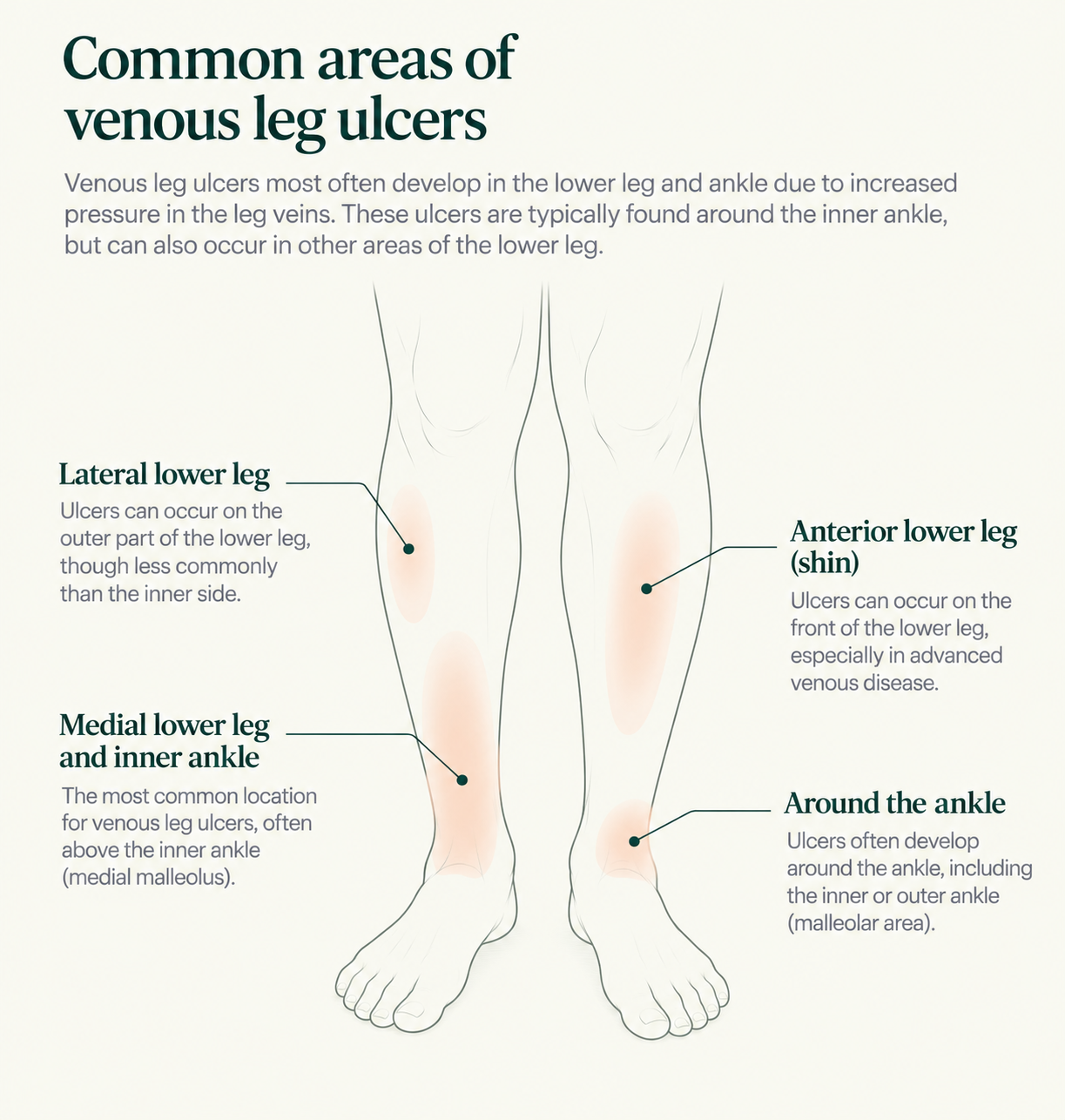
Venous leg ulcers are wounds that may develop when the leg veins have difficulty returning blood toward the heart. Increased venous pressure can contribute to swelling, skin inflammation, and breakdown, often around the lower leg or ankle.
Skin discoloration, heaviness, swelling, or recurrent wounds can be clues. Location alone cannot confirm that an ulcer is venous, so an appropriate evaluation matters.
Changes in the skin and veins
Healthy leg veins use valves and muscle movement to help return blood toward the heart. When this system does not work well, persistent pressure within the veins can affect nearby skin and tissues. Some people notice darkening, itching, thickening, or swelling long before an ulcer opens.
Understanding delayed healing
Why Might a Venous Leg Ulcer Be Slow to Heal?
A venous ulcer can remain open when swelling or abnormal venous pressure continues despite routine wound dressings. Irritation, infection, other medical conditions, and inconsistent treatment may also slow progress.
Some wounds have both venous and arterial causes. A wound that does not improve as expected warrants reassessment of circulation and the overall treatment plan.
Why ulcers can return
An ulcer may briefly look better with dressings but reopen when the underlying swelling and venous pressure remain uncontrolled. Surrounding skin may become fragile and inflamed, making even minor trauma more consequential. Persistent or recurrent ulcers deserve a closer look at contributing vein disease and circulation.
Understanding your evaluation
How Are Venous Leg Ulcers Evaluated?
Your clinician examines the wound, skin, swelling, pulses, and medical history. An arterial circulation assessment is important before deciding whether compression is appropriate.
A venous ultrasound may be recommended to assess reflux or obstruction. Additional testing or vascular referral depends on the findings and how the wound responds.
Circulation and vein testing
A wound near the ankle is not automatically a venous ulcer. The examination may need to distinguish venous disease from reduced arterial blood flow, pressure, inflammation, or other causes. Results of pulse examination and circulation testing help determine whether compression is safe and whether referral to a vascular specialist is appropriate.
Evidence-based wound treatment
How Are Venous Leg Ulcers Treated?
When safe for the individual’s circulation, compression is a central treatment for venous ulcers. The type and amount of compression must be selected after clinical assessment, not chosen from a generic instruction.
Care may also include wound cleansing, appropriate dressings, management of swelling, and consideration of vein treatment when indicated. Antibiotics are used for clinical infection, not routinely for an open ulcer.
Compression must be individualized
Compression helps counter elevated venous pressure and can reduce swelling, but the safest approach depends on the person’s arterial circulation, mobility, symptoms, and ability to tolerate the treatment. Dressings protect the wound and manage drainage, but they do not correct venous reflux. Some patients may benefit from a separate vein evaluation or procedure.
Practical daily habits
What Can You Do at Home to Support Healing?
Follow your prescribed dressing and compression plan, and keep follow-up visits. Elevating your legs and gentle walking or ankle movement may support circulation when appropriate for your condition.
Progress is often affected by what happens between visits. Following a prescribed compression plan consistently, protecting the dressing, and attending reassessment visits can be important. Tell your clinician if a wrap slips, becomes uncomfortable, or causes new symptoms rather than simply tolerating the problem.
Know when to seek help
What Warning Signs Need Medical Attention?
Contact the clinic promptly if the wound enlarges, drainage or odor increases, redness spreads, swelling worsens, or new pain develops. An unexpected change after applying compression should be reviewed promptly.
New severe pain, numbness, or unusual color changes after a compression wrap require immediate attention because they may indicate impaired circulation. Rapidly spreading redness, fever, or feeling seriously unwell can suggest infection. A wound that is gradually worsening also deserves earlier review, even if there is no fever.
Long-term leg health
How Can You Prevent Another Venous Leg Ulcer?
Venous ulcers can recur after the skin closes. Your long-term plan may include prescribed maintenance compression, monitoring swelling, regular skin care, movement, and treatment of underlying venous disease when appropriate.
Return for assessment if a previously healed area reopens or new skin changes develop.
Long-term prevention
A closed venous ulcer is not always the end of treatment. Long-term strategies often focus on controlling swelling, protecting the skin, and addressing underlying venous disease where appropriate. The clinician can help decide whether ongoing compression or specialist evaluation is recommended after healing.
Answers to common questions
Frequently Asked Questions
Are all ankle wounds caused by vein problems?
No. Arterial disease and other causes can look similar. An evaluation helps identify the cause.
Is compression right for everyone?
No. Circulation must be assessed so compression can be prescribed safely and appropriately.
Why does my ulcer keep returning?
Persistent venous disease and swelling can contribute to recurrence. A prevention plan may help.
Do I need antibiotics?
Not necessarily. Antibiotics are generally reserved for wounds with clinical infection.
Managing Venous Disease Supports Healing
A wound that does not heal deserves a plan that addresses both the skin and the underlying circulation. Our clinic can evaluate your ulcer and discuss appropriate next steps.
If you or someone you care for has a venous leg ulcer, timely evaluation can help determine the most appropriate next step.
References and Further Reading
For additional information, these independent resources may be helpful alongside your individualized care plan.
This guide is provided by The Wound Specialists for general patient education and informational purposes only. It is not a substitute for individualized medical evaluation, diagnosis, or treatment from a qualified healthcare professional.
Compression, wound care, activity, and vascular treatment recommendations depend on circulation, the wound, medical history, and other clinical factors. Compression should be selected following appropriate clinical assessment.
Medical information and treatment recommendations may change over time, and this guide may not address every clinical circumstance. Although reasonable efforts are made to provide accurate and current information, completeness and accuracy cannot be guaranteed.
Consult your treating healthcare professional before making changes to your wound care or treatment plan. Seek qualified medical care for new or worsening symptoms, and do not delay seeking medical attention because of information in this guide.
Reading this guide does not establish a physician-patient relationship with The Wound Specialists.
Concerned about a venous leg ulcer?
Our Plantation clinic can help you arrange an evaluation and discuss an individualized care plan.